AFM PROBES · PILOT COLLABORATIONS
PolarTip
Silicon carbide AFM probes for fine surface features.
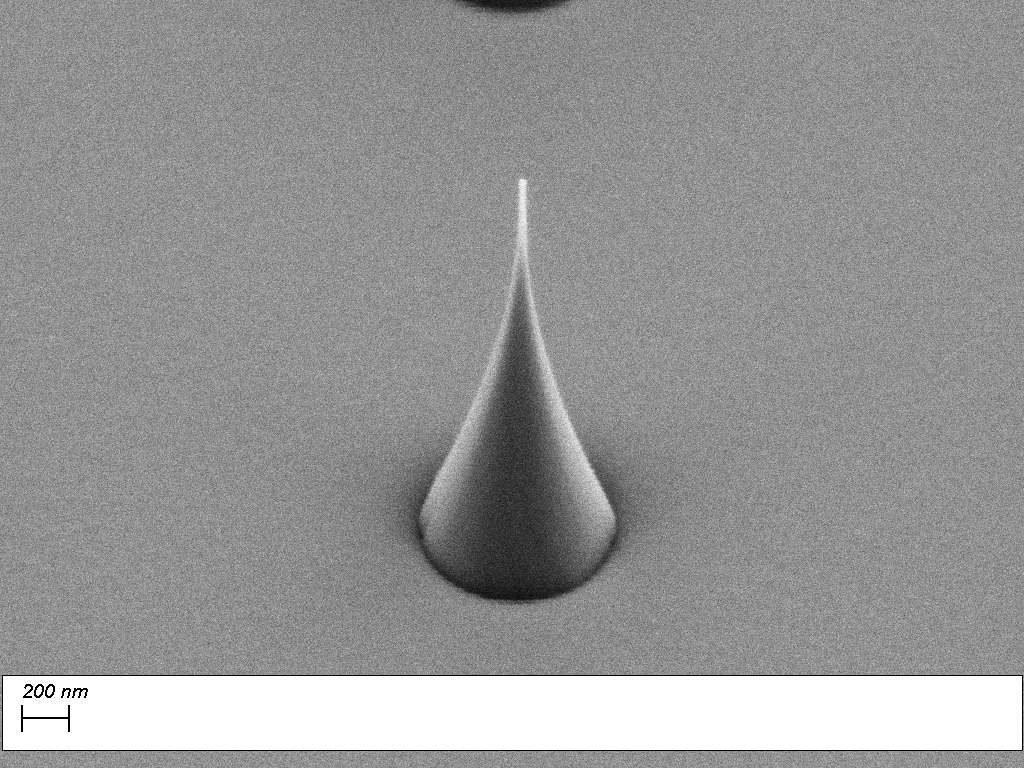
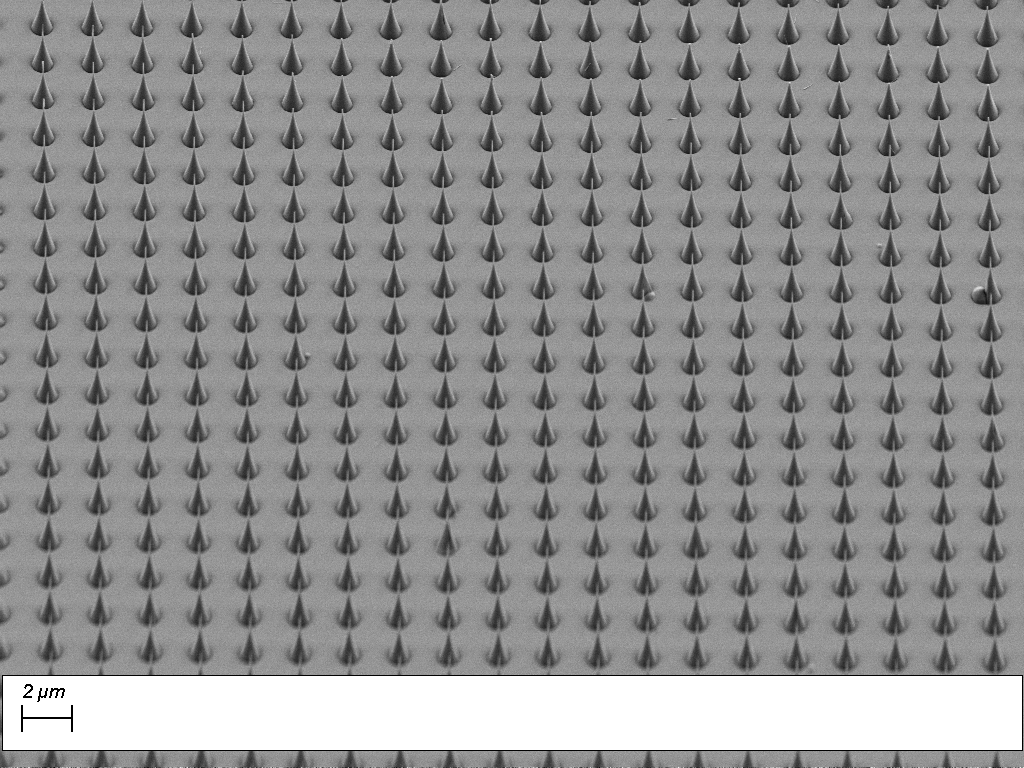
Circularly symmetric SiC tips with a measured 5 nm apex radius and a high aspect ratio. Discuss a pilot around your sample, AFM system and measurement priorities.
TIP MATERIAL
SiC
MEASURED APEX RADIUS
5 nm
ASPECT RATIO
High
TIP SHAPE
Circularly
symmetric
TIP GEOMETRY
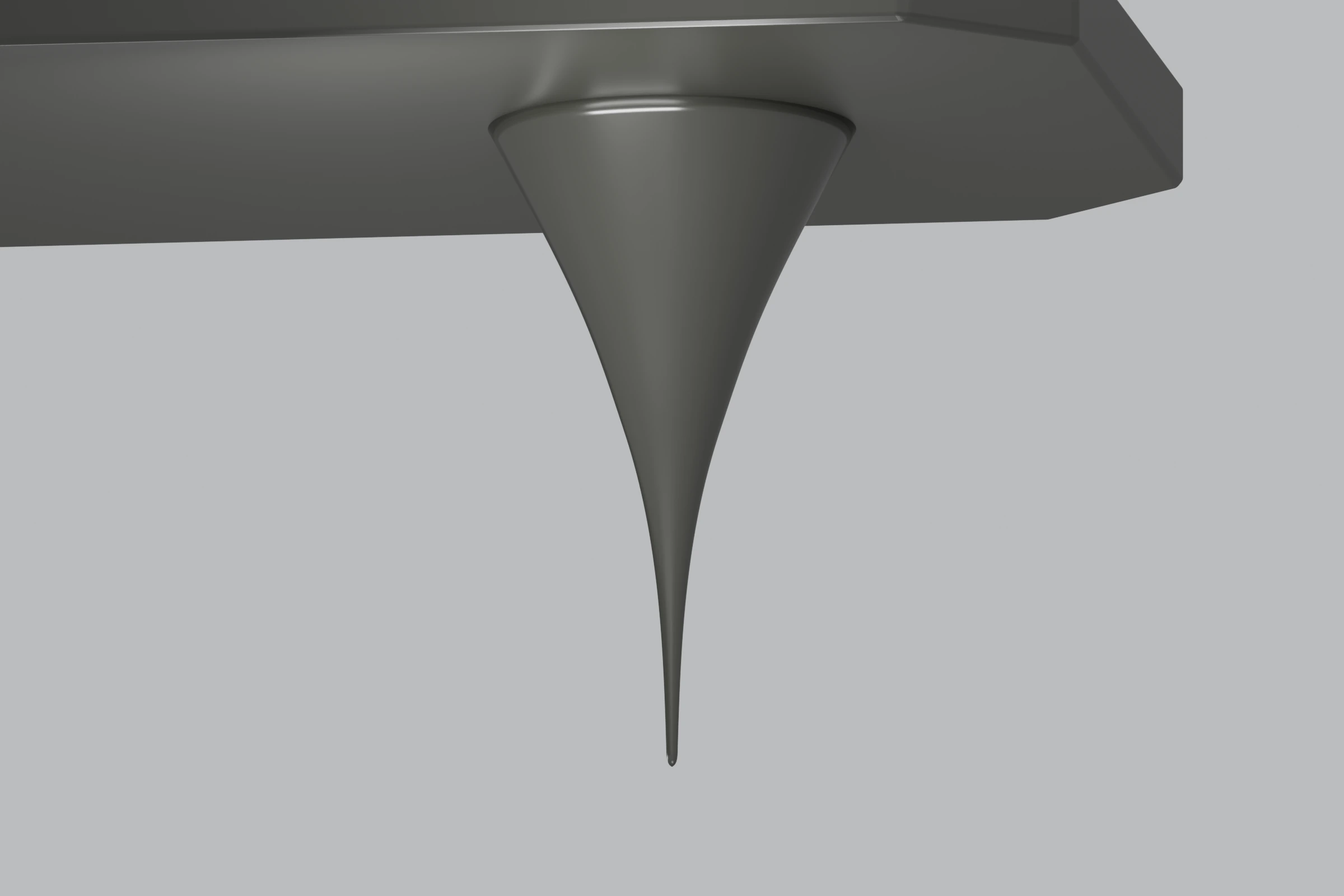
A sharp apex.
A consistent profile.
PolarTip’s circularly symmetric tip has the same profile around its axis. Smoothly curved sidewalls taper towards the apex; the high aspect ratio helps the tip access fine, narrow features.
Measured tip curvature
The measured apex radius is 5 nm. The full tip profile, sample and scan settings also influence the detail captured in an AFM image.
Access to the feature
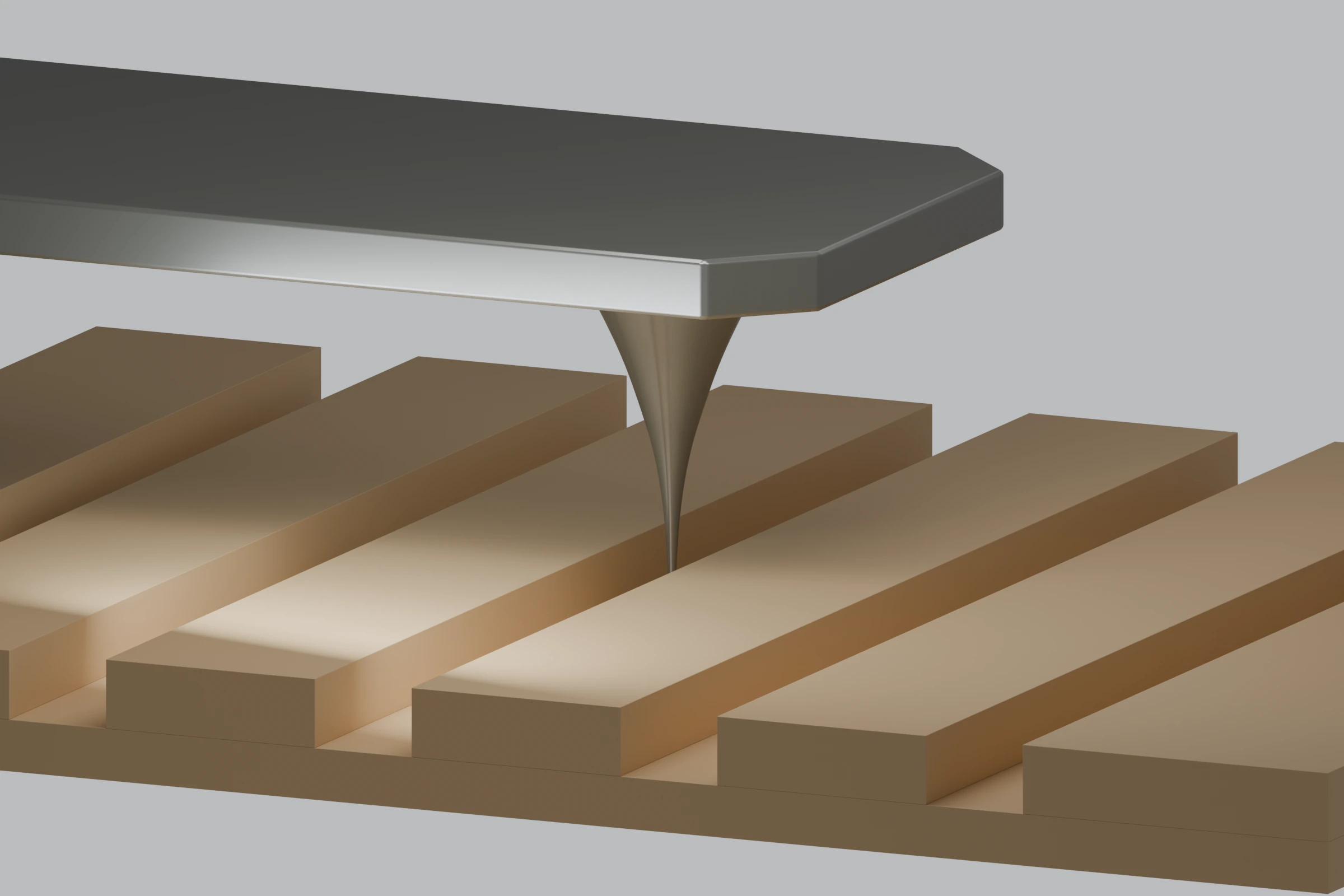
For trenches, pits and closely spaced structures, match the usable tip profile to the opening, depth and sidewall slope.
MEASUREMENT PRIORITIES
Feature access. Tip life.
Scanning speed.
01
Repeated surface
measurements
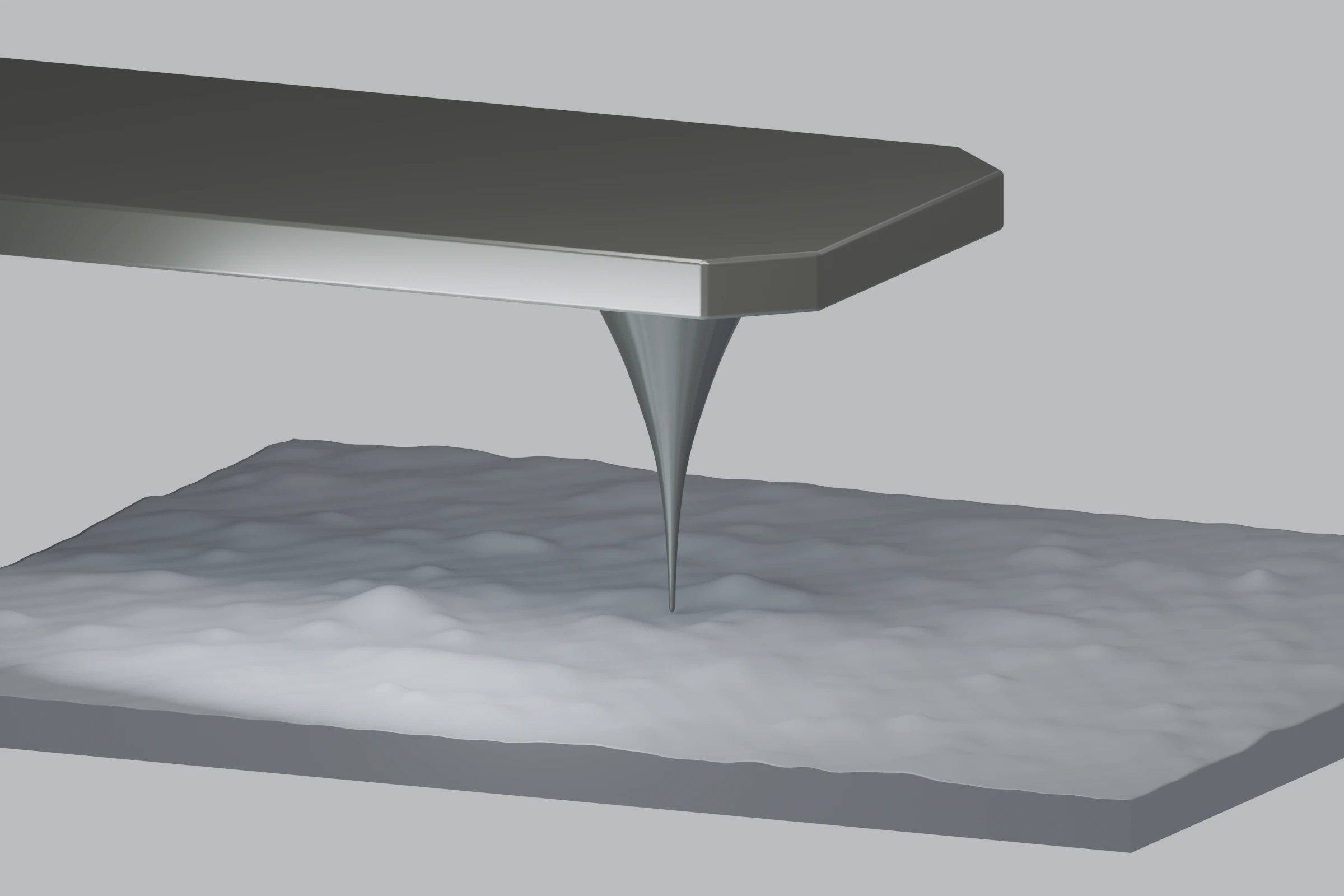
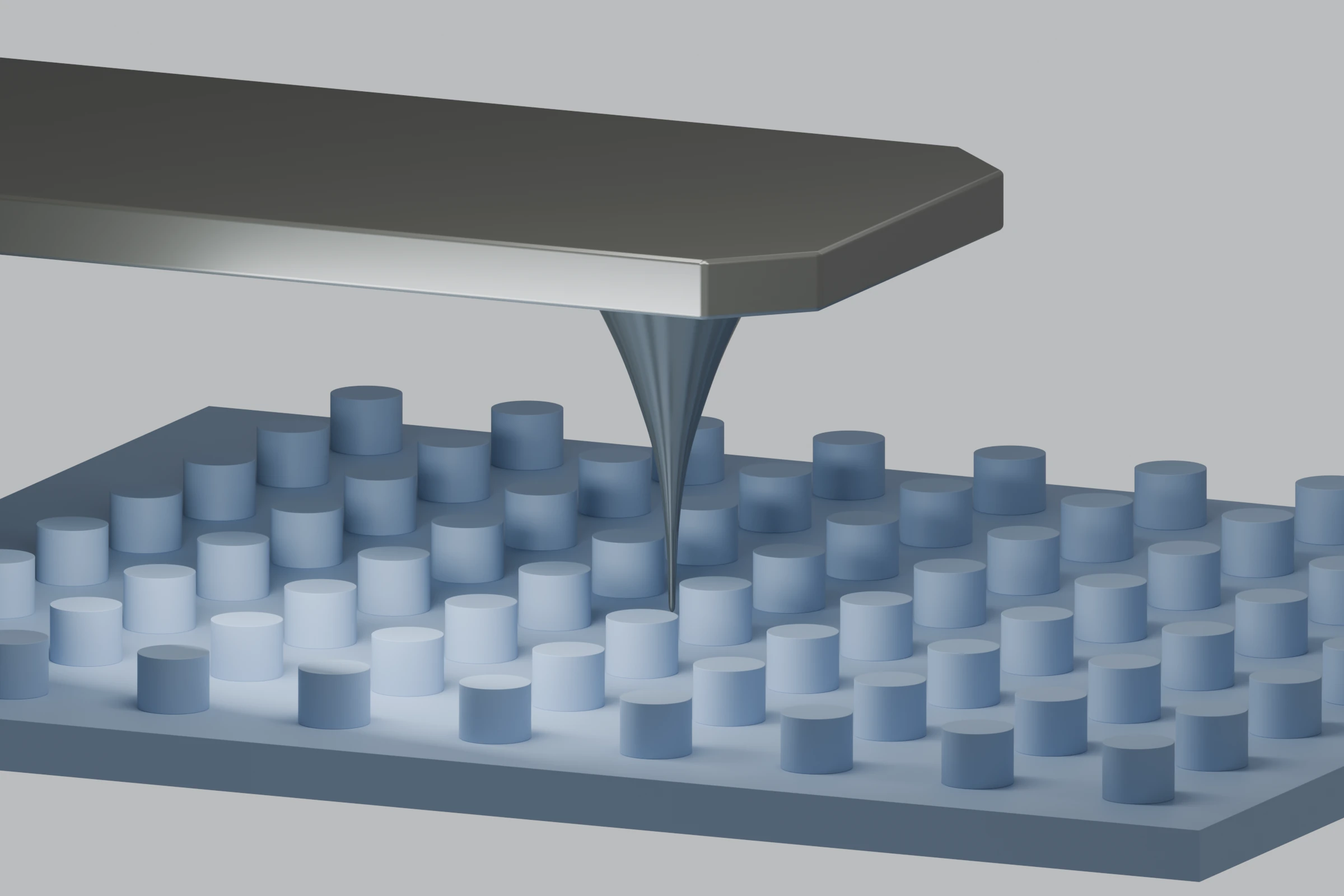
Explore useful tip life across thin films, polished surfaces and patterned samples. Compare image quality, tip condition and replacement frequency under matched operating conditions.
02
Narrow-feature
access
Investigate trenches, pits and closely spaced features. Define the tip profile and working length around the openings and depths that matter to your measurement.
03
High-speed
AFM development
Develop faster measurements with us. SiC’s stiffness relative to density supports exploration of high-frequency cantilevers; geometry, tip mass and damping must suit your scanner, readout and force control.
FABRICATION EXPERTISE
Shaped in silicon carbide.
PolarTip brings our nanofabrication expertise to the geometry that connects an AFM instrument with its sample.
We shape hard SiC into tips designed to retain their geometry through repeated scans. Pilot evaluations assess tip condition and image quality on your sample under agreed operating conditions.
WORK WITH OUR TEAM
Plan a PolarTip pilot.
Tell us which AFM system you use, what you need to measure and where your current probe limits the work. We’ll discuss the fit, define the probe requirements and agree how to evaluate the result.
01
Share the measurement
Start with your AFM model, operating mode and sample. Describe the limitation you want to investigate; an initial outline is enough.
02
Define the evaluation
Discuss instrument fit, probe requirements and a focused comparison of feature access, tip life or scanning response.
03
Agree the practical details
Agree the scope, comparison conditions, responsibilities and next steps before a pilot begins.
RESEARCH DIRECTION
From surface shape
to optical insight.
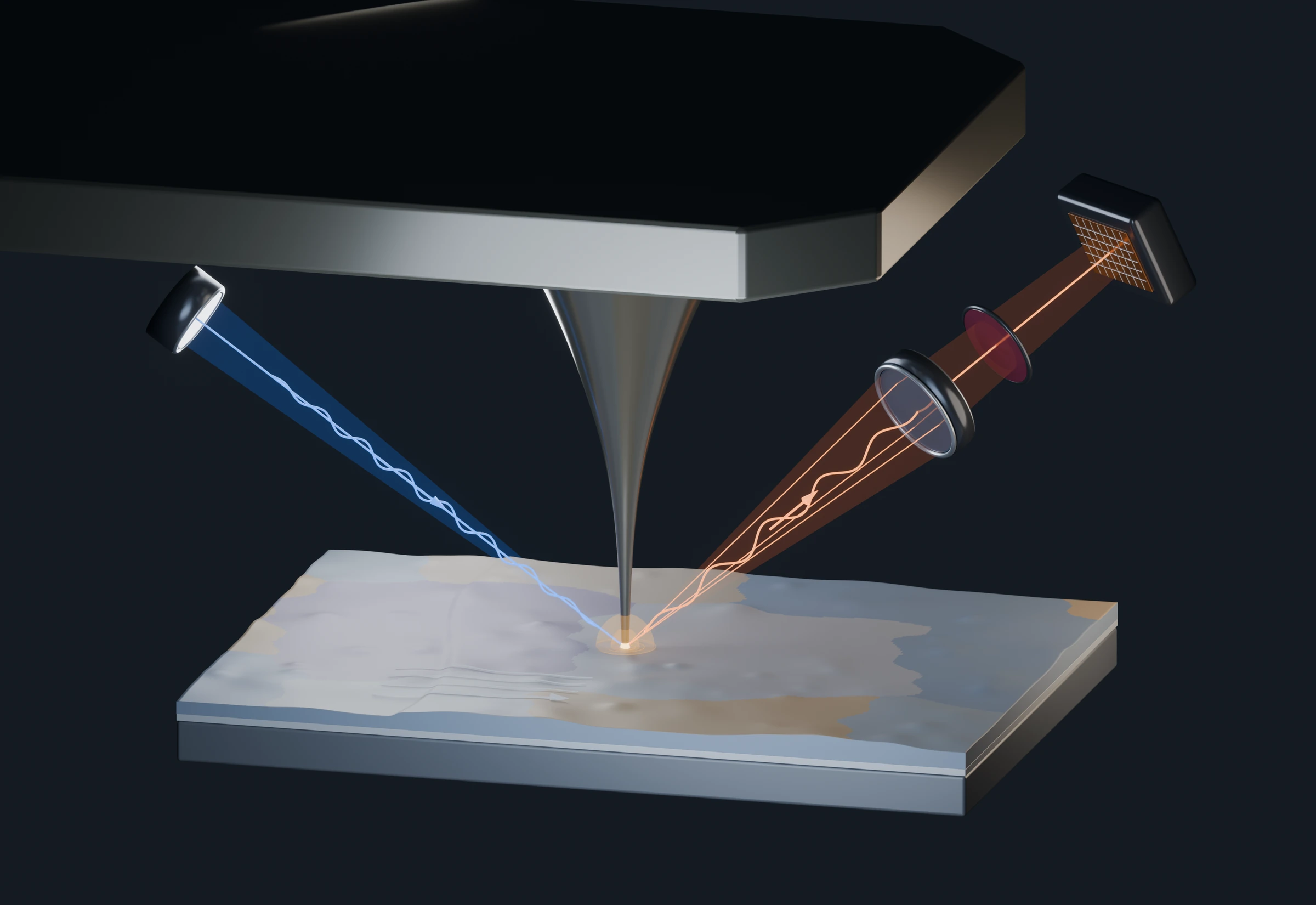
PolarTip draws on our shared SiC materials and fabrication expertise. Alongside its development, we are exploring optical sensing toward PolarSense, a future product direction with thin-film measurement as its first focus.
Connecting Raman polaritonics with an AFM probe is a related research direction. It aims to add information about nearby materials to surface topography and requires a suitable sensing geometry, illumination and spectral readout.
Before we discuss a pilot
Who are PolarTip pilots for?
Researchers, surface-metrology teams and instrument partners investigating feature access, useful tip life or high-speed AFM development. Start with an application discussion so we can assess the fit and agree a possible evaluation.
What does the measured 5 nm radius mean?
It describes local curvature at the tip’s apex. For your evaluation, we’ll also consider the full tip profile and the dimensions of the features you need to measure.
How would we evaluate useful tip life?
Agree what counts as useful data, then compare image quality and tip condition under matched conditions. Material is one part of the choice; geometry, coatings and operating conditions also matter. Read the tip-life evaluation guide.
Can a pilot include faster scanning or optical sensing?
High-speed AFM is a collaborative development focus, with probe response and instrument compatibility defined together. AFM-integrated optical sensing is a research direction requiring dedicated optics and readout; its scope is discussed separately from the surface-measurement evaluation.
LET’S EXPLORE YOUR APPLICATION
Discuss a
PolarTip pilot.
Start with your sample, AFM system and the measurement you want to improve.